.png?width=130&height=53&name=Vector%20(21).png "TermScout Logo")

AI Overview
What are the biggest procurement contract challenges?
Procurement teams face growing pressure to manage contract volume, reduce supplier risk, maintain compliance, negotiate fair terms, and accelerate vendor onboarding. Contract Intelligence, Contract Benchmarking, and AI-powered contract analysis help procurement leaders identify hidden risks, compare agreements against market standards, and make faster, more informed sourcing decisions.
Procurement Success Starts With Better Contracts
Procurement teams are expected to do more than negotiate pricing.
They're responsible for protecting the business from supplier risk, maintaining compliance, accelerating vendor onboarding, and ensuring every commercial agreement supports long-term business goals.
Yet one of the biggest barriers to procurement efficiency isn't supplier selection.
It's the contract.
Vendor agreements determine how costs, obligations, liability, security, and operational risk are allocated. When contracts are inconsistent, difficult to evaluate, or heavily skewed toward vendors, procurement slows—and so does the business.
Modern procurement leaders aren't looking for more manual review.
They're looking for better intelligence.
Key Takeaway
Procurement challenges rarely begin with suppliers—they begin with contracts that are difficult to evaluate, benchmark, and negotiate.
Why Procurement Teams Face Increasing Contract Complexity
Every new supplier introduces another contract.
Every contract introduces another set of obligations.
According to the original article, procurement leaders must balance supplier risk, compliance requirements, vendor relationships, and cost control while managing growing contract volumes and increasing pressure to move quickly.
Without consistent contract evaluation, procurement teams often experience:
- Longer approval cycles
- Greater legal dependency
- Increased supplier risk
- Inconsistent negotiations
- Reduced visibility into contract quality
These challenges affect not only procurement but also Legal, Finance, Security, and Operations.
The Five Biggest Procurement Contract Challenges
1. Managing High Contract Volume
As organizations grow, procurement teams manage hundreds—or even thousands—of vendor agreements.
Every contract contains unique obligations related to:
- Data privacy
- Liability
- Indemnification
- Security
- Payment terms
- Service levels
According to the source article, growing contract volume makes it easier to overlook hidden risks, delay negotiations, and miss costly contractual obligations.
Better Approach
Contract Intelligence enables procurement teams to analyze large contract portfolios efficiently by identifying risks at the clause level instead of relying solely on manual review.
2. Increasing Compliance and Risk Pressure
Modern procurement extends well beyond purchasing.
Procurement leaders must also ensure contracts comply with regulatory obligations while protecting the organization from unnecessary commercial risk.
Common areas include:
- Privacy compliance
- Security obligations
- Liability allocation
- Regulatory requirements
- Vendor accountability
Missed contractual risks can result in:
- Compliance failures
- Budget overruns
- Operational disruption
- Supplier disputes
AI-powered contract analysis helps identify these risks before agreements are finalized.
3. Vendor Contracts That Favor the Supplier
Most supplier contracts begin from the vendor's perspective.
This often results in:
- One-sided indemnification
- Aggressive liability limitations
- Hidden commercial fees
- Restrictive service commitments
- Limited customer flexibility
Without objective market context, procurement teams may struggle to determine whether these provisions are standard or unusually vendor-friendly.
Benchmarking Insight
Contract Benchmarking compares vendor language against thousands of comparable agreements, helping procurement teams distinguish accepted commercial practice from unnecessary negotiation positions.
4. Slow Contract Turnaround
Procurement momentum often disappears during legal review.
Internal stakeholders become frustrated.
Suppliers wait for approvals.
Projects stall.
According to the original article, lengthy contract review processes reduce trust while slowing critical business initiatives.
Better Approach
Independent contract certification helps reduce repetitive legal discussions by providing objective evidence that agreements align with defined market standards.
This enables procurement, legal, and suppliers to move forward more efficiently.
5. Inconsistent Contract Review
Different reviewers often reach different conclusions.
The result is inconsistent procurement decisions, variable supplier experiences, and unnecessary delays.
Standardized review processes improve:
- Internal governance
- Procurement consistency
- Supplier confidence
- Decision quality
Objective benchmarking creates a common evaluation framework across the organization.
Key Takeaway
Procurement teams become more efficient when every contract is evaluated using the same objective market standards.
Contract Intelligence Turns Contracts Into Procurement Data
Traditional procurement asks:
"Can we approve this vendor?"
Contract Intelligence asks:
- Which clauses create supplier risk?
- Which terms differ from market standards?
- Which provisions require negotiation?
- Which contracts can move through procurement immediately?
Rather than reviewing every agreement equally, Contract Intelligence identifies the Contract Signals most likely to affect procurement outcomes.
This allows procurement professionals to focus on meaningful commercial issues while accelerating routine approvals.
Contract Benchmarking Improves Supplier Negotiations
Negotiating without market context creates uncertainty.
Contract Benchmarking replaces assumptions with objective evidence.
Instead of asking whether a vendor clause "feels reasonable," procurement teams can determine:
- Whether language reflects market norms
- Which clauses are commonly negotiated
- Whether pricing terms align with comparable agreements
- Which provisions increase commercial risk
Market intelligence creates stronger negotiating positions while reducing unnecessary legal debates.
Contract Signals Procurement Teams Should Prioritize
Certain clauses consistently influence procurement decisions.
These Contract Signals include:
- Limitation of liability
- Indemnification
- Data privacy
- Security obligations
- Payment terms
- Service level commitments
- Termination rights
- Audit provisions
Reviewing these provisions early helps procurement teams reduce delays while improving supplier relationships.
How Predict™, TrustMark™, and Certify™ Improve Procurement
The original article describes how TermScout's solutions help procurement teams evaluate contracts more consistently and efficiently.
Predict™
Predict™ applies AI-powered Contract Intelligence to:
- Surface clause-level risks
- Benchmark vendor agreements
- Detect Contract Signals
- Highlight market deviations
- Improve procurement decision-making
TrustMark™
TrustMark™ independently certifies procurement agreements against defined fairness criteria, helping suppliers and procurement teams establish trust earlier in the contracting process.
Certify™
Certify™ enables procurement professionals to evaluate not only financial terms but also how favorable or risky contractual language is compared with broader market standards.
Together, these solutions enable procurement teams to negotiate with greater confidence while reducing unnecessary contract friction.
From Procurement Function to Strategic Growth Driver
The original article emphasizes that procurement is evolving from a transactional function into a strategic business capability. Organizations using Contract Intelligence gain more than operational efficiency, they improve supplier relationships, reduce commercial risk, and create measurable business value.
Modern procurement leaders use contract data to:
- Support better sourcing decisions
- Improve supplier transparency
- Reduce organizational risk
- Accelerate vendor onboarding
- Increase procurement influence across the business
Contracts become strategic assets rather than administrative requirements.
Frequently Asked Questions
What are the biggest procurement contract challenges?
Common challenges include high contract volume, compliance obligations, supplier-favorable terms, inconsistent contract review, and slow procurement approvals.
What is Contract Intelligence?
Contract Intelligence combines AI, legal expertise, and benchmarking to identify contract risks, prioritize review, and improve procurement decision-making.
What is Contract Benchmarking?
Contract Benchmarking compares vendor agreements against broader market data, helping procurement teams determine whether contract language reflects accepted commercial practice.
How does Predict™ help procurement?
Predict™ analyzes contracts using AI to identify clause-level risks, benchmark agreements, and surface Contract Signals before procurement decisions are made.
Why does contract certification matter?
Independent certification helps buyers, suppliers, and procurement teams establish trust by demonstrating that agreements have been evaluated against recognized standards.
Related Resources
Continue exploring:
- Contract Intelligence
- Contract Benchmarking
- Contract Signals
- Procurement Intelligence
- Predict™
- TrustMark™
- Certify™
Transform Procurement Into a Competitive Advantage
The future of procurement isn't about reviewing more contracts.
It's about making better contract decisions.
Organizations that combine Contract Intelligence, Contract Benchmarking, Contract Signals, Predict™, TrustMark™, and Certify™ gain the visibility needed to reduce supplier risk, negotiate more effectively, and accelerate procurement without sacrificing governance.
When contracts become structured, benchmarked business intelligence instead of static legal documents, procurement moves beyond cost control to become a strategic driver of resilience, growth, and competitive advantage.

Milada Kostalkova
Director of Legal Operations and Contract Automation
Milada empowers businesses to turn contracts into a competitive advantage with AI-powered analysis and 10+ years in legal ops, paralegal work, and SaaS legal tech. She also leads customer success strategy and operations, helping clients achieve maximum value and long-term success.
Share this
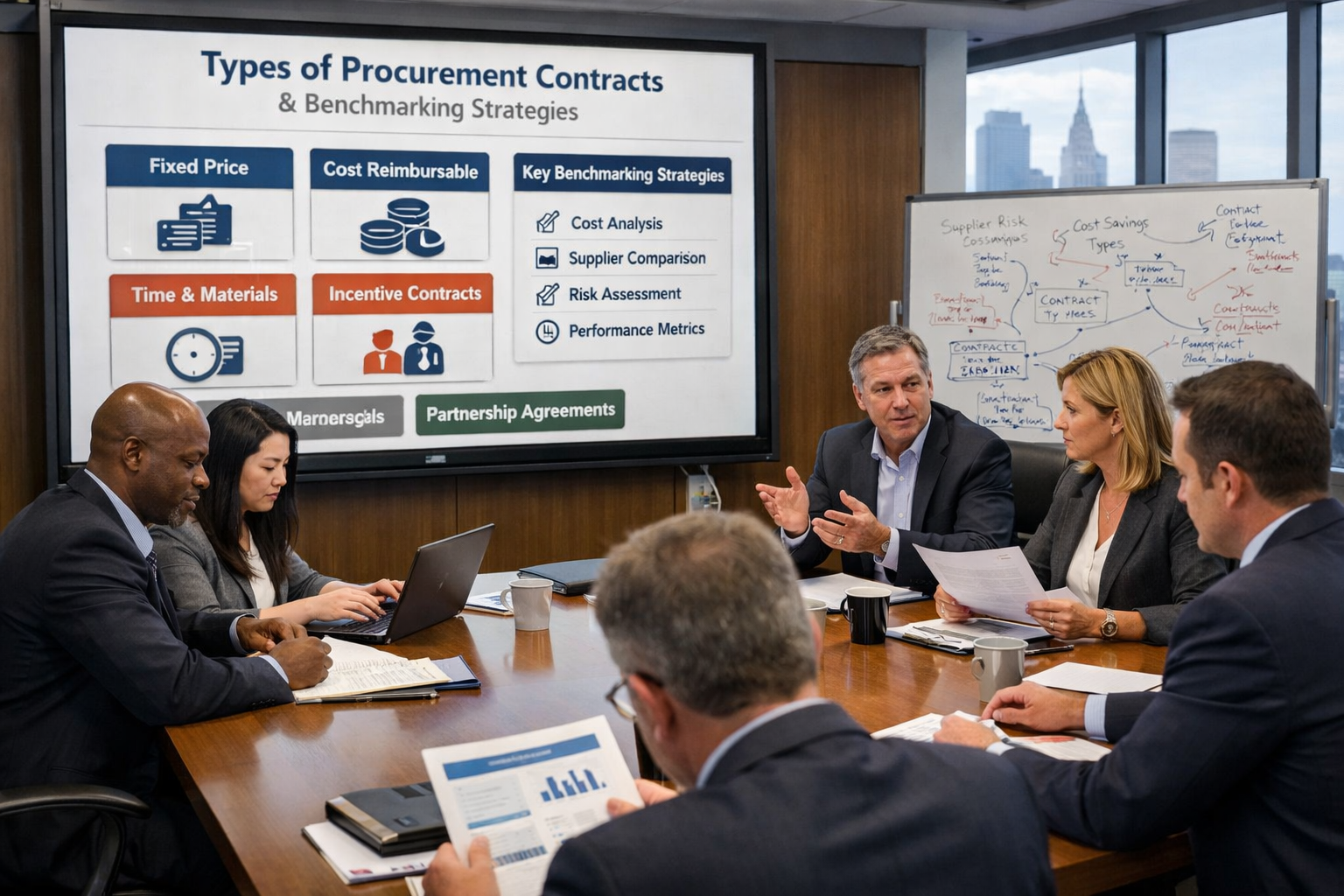
Types of Procurement Contracts | Procurement Benchmarking Guide

Why Contract Management Software Isn’t Enough for Legal